
The Australia and New Zealand Industrial and Applied Mathematics (ANZIAM) NSW branch 2026 annual meeting will take place 26-27 November 2026 at the Kirby Institute, UNSW Sydney.
Everybody interested in applied and industrial mathematics is welcome to attend and contribute – not just ANZIAM members!
 For this meeting, we are collaborating with the Engineering Mathematics Group (EMG) and we thank them for their contribution and sponsoring Dr Louise Olsen-Kettle’s invited talk.
We are excited to announce our two invited speakers and their talks:
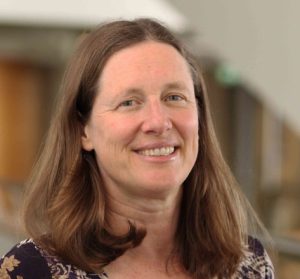
Dr Louise Olsen-Kettle
Senior lecturer, Swinburne University of Technology
Talk: Multiscale damage models for composite materials
Achieving sustainable development of new materials and resources is imperative for future generations. Apart from making better materials, building mathematical models of damage can help avoid structural disasters and catastrophic failure of materials. Anisotropic and heterogeneous materials are used widely in construction (concrete), manufacturing, medical and dental applications (composites), and the mining industry (rock). A severe limitation imposed by many damage models is the assumption of initial isotropy and homogeneity. My research aims to advance continuum damage models to consider composite materials and model heterogeneity and anisotropy at various length scales. I’ll discuss various applications of my research including composites, 3D printed materials, early age concrete and polymer concrete.
 Dr Wang Jin
Lecturer, School of Population Health, UNSW Sydney
Talk: From Heterogeneity to Health Outcomes: Modelling Across Scales
Heterogeneity is a defining feature of biological systems. Understanding how variation across biological scales shapes health outcomes is essential for controlling infectious diseases and developing effective health policies. My research uses mathematical and statistical models to capture variation and interactions within biological systems, and to investigate how these features influence collective behaviour and health outcomes. This talk will trace my research trajectory, spanning models of collective cell movement, pathogen–immune interactions and HIV viral reservoir establishment, as well as population-level models of infectious disease transmission, waning immunity, and vaccine effectiveness. These examples illustrate how modelling can capture heterogeneity across scales, support the interpretation of empirical evidence, and address important questions in infectious disease and public health.
Please help us advertise this meeting by forwarding this to anyone who might be interested in attending.
You can register for the meeting by creating a booking by 16 November 2026 here or using the below QR code:
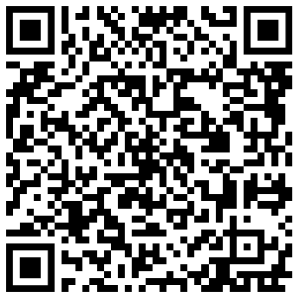
Registration fees depend on ANZIAM membership and are reduced for students (registration is free for presenting students). Registration fees cover lunch on both days, Thursday afternoon tea, and Friday morning tea. The conference dinner on Thursday 26 November 2026 is self-paid and will be held at Fratelli Fresh Darling Harbour.
The meeting will start on Thursday 26 November between mid-morning and noon and conclude after lunch on Friday 27 November. The ANZIAM NSW AGM will be held after the meeting.
The Kirby Institute is in the Wallace Wurth building of UNSW (on the corner of Botany and High Street) and is directly next to the L2 light rail stop “UNSW High Street” connecting it directly to Sydney Central Station, Wynyard, and Circular Quay.
If you want to contribute a talk, please submit your title and abstract here by 30 October 2026: ANZIAM NSW 2026 talk submission
ANZIAM NSW can provide travel funding to students attending the meeting (one or both days). To apply for travel support, students should send
- a statement (e.g. short email) from their supervisor confirming that they cannot fund travel to this meeting (in case of partial funding, please include the amount of funding received), and
- receipts for travel and accommodation costs
to the meeting organizers ([email protected], [email protected]) by 4 December 2026.
All students applying for travel support will receive at least $100 financial support for their travel cost. Funds permitting, we will fully reimburse all travel and accommodation costs.
We look forward to welcoming you at the Kirby Institute in November!
Eva Stadler & Matt Berry